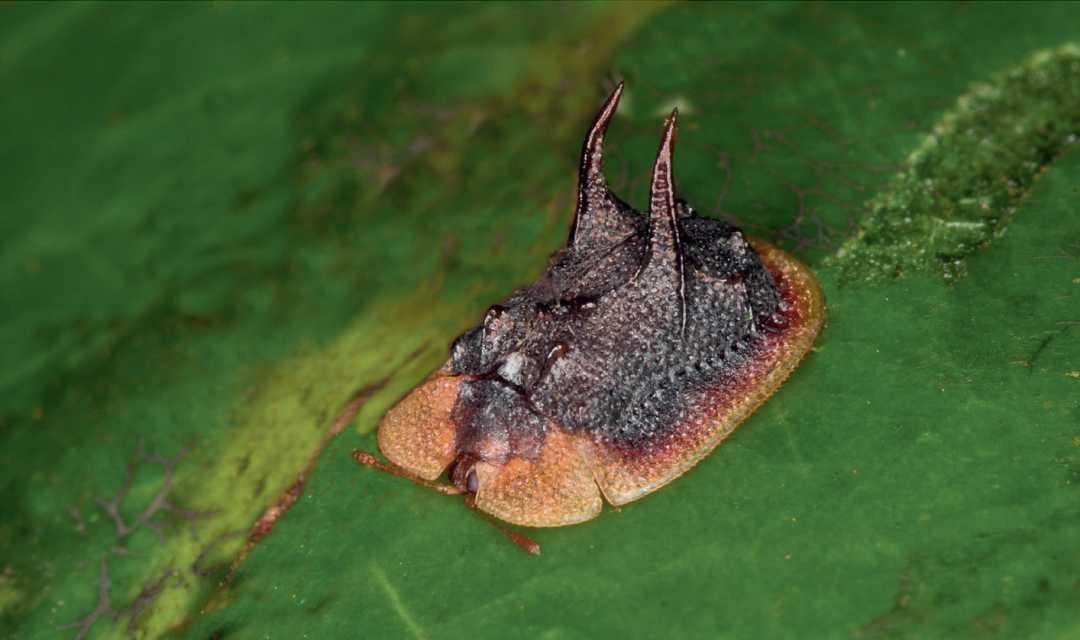
The beetle’s "horns" are not just decorative; they likely serve as a defense mechanism against predators. The sharp projections may deter birds or small mammals from attempting to feast on the beetle, while their dramatic shape could also disrupt the insect’s outline, confusing would-be attackers. Its shell, often marked with intricate patterns or muted hues, further enhances its survival strategy, blending with tree bark or foliage when the horns alone aren’t enough to ward off danger.
Endemic to Madagascar’s lush forests, this tortoise beetle thrives in a habitat where evolution has spawned countless unique species. While its horns evoke images of mythical creatures, they are a product of natural selection, honed over millennia to ensure the beetle’s survival. For entomologists and nature enthusiasts, encountering this horned marvel is a reminder of the island’s status as a biodiversity hotspot—where even the smallest creatures wear nature’s most imaginative armor, blurring the line between reality and fantasy.
-------- END --------